
A good candidate for hair transplant surgery depends on specific hair transplant requirements, donor hair quality, and overall health. Understanding hair transplant eligibility before undergoing a procedure can save you time, prevent complications, and help achieve natural-looking results.
At Nature’s Way Hair Restoration / Cleveland Cosmetic Surgery, we specialize in FUT hair transplant treatment, a method that restores hair by transplanting follicular units from donor areas to thinning or bald regions. Dr. Nicholas C. Diamantis, MD, DMD, FAACS, and our team carefully evaluate each patient to determine whether FUT is the best approach or whether alternative treatments may provide safer, more effective results. Through a personalized assessment, you’ll learn which procedures meet your goals, what to expect during recovery, and how to maintain long-term hair growth.
What Is FUT Hair Transplant Treatment?
This treatment involves removing a thin strip of scalp from the donor area, typically at the back of the head, and transplanting the individual follicular units into thinning or bald regions.
This technique allows Dr. Diamantis and his team to place more grafts in a single session than with other methods. It is particularly helpful for patients who want to restore large areas, such as the crown or frontal hairline. By using natural follicular units, FUT creates a dense and uniform appearance that blends seamlessly with existing hair.
How FUT Works
- A donor strip is carefully harvested from the scalp.
- Follicular units are meticulously dissected under magnification.
- Tiny incisions are made in the target areas.
- Grafts are implanted with attention to natural direction and spacing.
Ideal Applications
- Rebuilding receding hairlines
- Covering bald spots at the crown
- Increasing overall hair density in areas with thinning
At Nature’s Way Hair Restoration / Cleveland Cosmetic Surgery, Dr. Nicholas C. Diamantis and his team evaluate each patient’s eligibility. This helps determine whether you are a good candidate for a hair transplant and whether FUT or an alternative procedure best suits your needs. Understanding these steps helps you anticipate results, recovery, and long-term benefits.
Donor Area Limitations
Limited donor hair can affect the results of FUT hair transplant treatment. Patients with low follicle density, reduced scalp elasticity, or diffuse hair loss may not achieve full coverage. Evaluating these factors helps determine if FUT or alternative treatments are appropriate.
Low Donor Density
- Insufficient follicles reduce graft numbers.
- Miniaturized or weak follicles may fail to grow.
- Previous procedures can limit available donor hair.
Low-density donor areas may lead to patchy coverage. Careful scalp evaluation allows Dr. Diamantis to recommend methods that enhance results.
Poor Scalp Laxity
- Tight scalp tissue increases the risk of visible linear scars.
- Reduced elasticity complicates wound closure and healing.
- Fibrotic or tension-prone scalps may form uneven scars.
Limited scalp flexibility may make alternative techniques more suitable for improving density while reducing scar visibility.
Diffuse Unpatterned Alopecia (DUPA)
- Widespread thinning reduces donor reliability.
- Transplanted follicles may miniaturize or shed.
- Younger patients with rapid hair loss face long-term challenges.
At Nature’s Way Hair Restoration / Cleveland Cosmetic Surgery, FUE or non-surgical options can offer more reliable results for patients with these limitations.
Hair Loss Stability Concerns
Patients experiencing rapid or unpredictable hair loss may not be good candidates for hair transplant procedures. This hair transplant treatment relies on stable donor and recipient areas to create lasting density. Active thinning can affect results, leaving patches or uneven coverage.
Rapidly Progressive Hair Loss
- Rapidly progressive hair loss can make long-term planning difficult, and stabilizing hair loss with medical therapies before surgery may improve outcomes.
- Patients who do not use hair-stabilizing treatments may experience continued thinning.
- Early regression at the crown or frontal hairline can compromise FUT outcomes.
Rapid hair loss makes it difficult to predict long-term appearance. In these cases, delaying surgery or exploring alternative restoration methods can help preserve donor hair for future procedures.
Younger Patients
- Patients under 25 may face future hair loss that alters transplant results.
- Aggressive hairline reconstruction before stabilization can deplete donor reserves.
- Documented hair-loss progression helps guide appropriate timing for surgery.
Younger patients often benefit from less invasive strategies or partial restorations until hair loss stabilizes. Our team carefully evaluates hair-loss patterns and hair transplant eligibility to recommend the procedure that will deliver natural, lasting results.
Health and Biological Risk Factors
Certain medical and biological conditions can affect the effectiveness of hair transplant treatment. Your overall health and scalp biology influence how transplanted follicles survive and how your scalp heals.
Poor Wound Healing
Conditions such as diabetes, vascular disorders, or reduced blood flow from smoking can slow healing and affect graft survival. Prolonged incision recovery increases the risk of complications. Patients with healing limitations may consider alternative hair restoration methods.
Keloid or Hypertrophic Scar History
Individuals prone to raised or thick scars may develop noticeable linear marks. A family history of abnormal scarring can indicate a higher risk, guiding procedure planning to minimize visible scars.
Autoimmune Hair Disorders
Active autoimmune conditions, including alopecia areata, can reduce FUT success. Transplanted follicles may not grow evenly, and hair-loss patterns may fluctuate, complicating coverage.
At Nature’s Way Hair Restoration / Cleveland Cosmetic Surgery, medical history and scalp health are carefully reviewed to determine hair transplant eligibility and the most suitable procedure.
Lifestyle and Cosmetic Considerations
Certain lifestyle habits and cosmetic preferences can influence the success of FUT hair transplant treatment. Daily activities and hairstyle choices affect healing, scar visibility, and overall results.
Short Hairstyles
Very short hairstyles may reveal FUT linear scars. Patients who prefer buzz cuts or military-style haircuts often consider FUE or other methods to achieve minimal visible scarring. Hair length preferences guide the choice of procedure.
High-Activity Lifestyles
Activities that put pressure or friction on the scalp, such as weightlifting, contact sports, or tight helmets, can interfere with incision healing and graft survival. Adjusting routines during recovery supports better outcomes.
Unrealistic Expectations
Expecting dense coverage beyond available donor hair can compromise results. Overharvesting may cause visible scarring or insufficient hair. Natural follicle distribution and hairline limits should shape treatment planning.
We review lifestyle habits and aesthetic goals to determine hair transplant eligibility and whether FUT or alternative approaches best fit your needs.
Hair Transplant Eligibility Factors
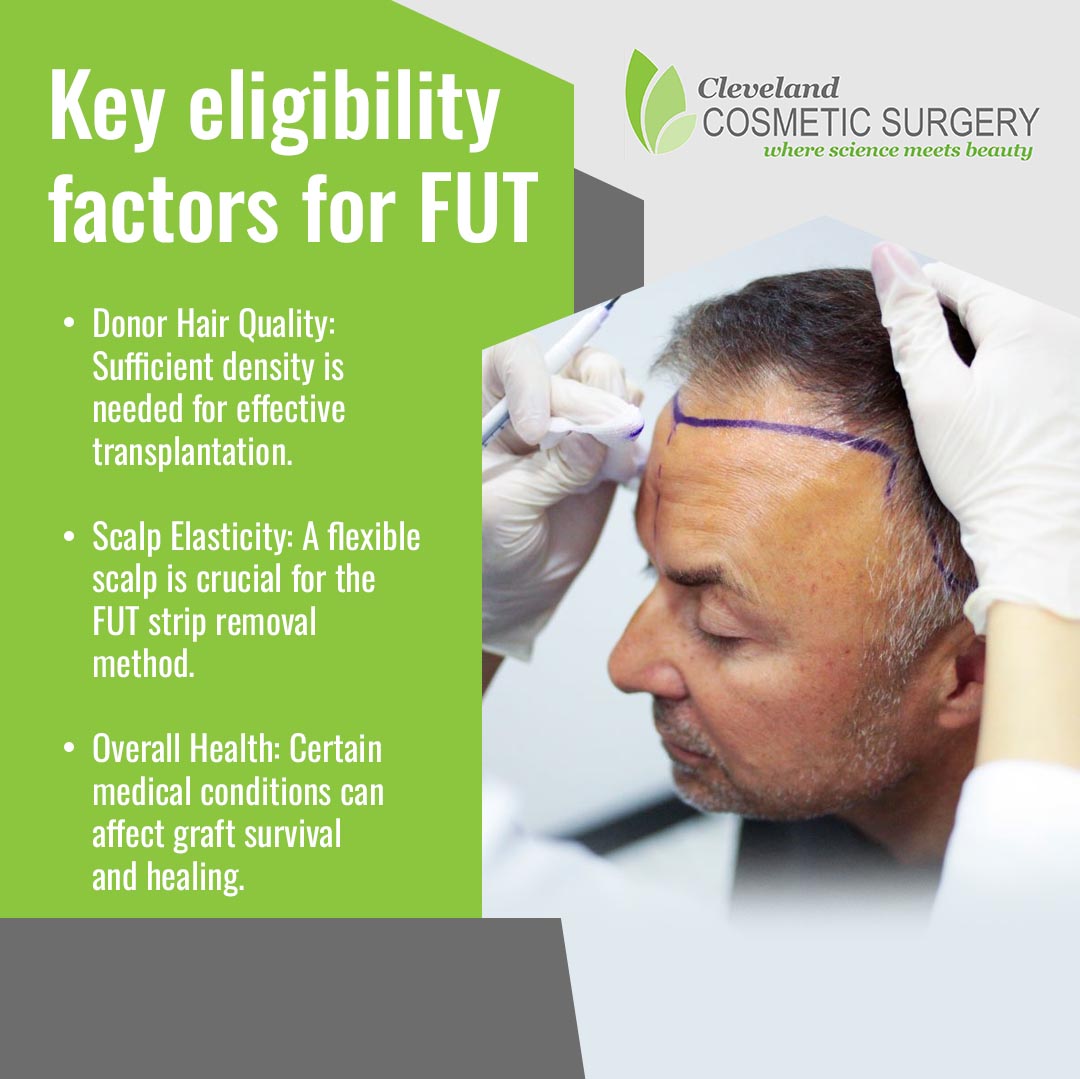
Eligibility for the hair transplant treatment depends on multiple factors, including donor quality, scalp characteristics, hair-loss pattern, and overall health. Not every patient is a good candidate for a hair transplant, so careful evaluation helps determine the safest and most effective approach.
Donor Hair Quality
- Dense, healthy donor follicles are essential for achieving natural-looking results.
- Follicles weakened by genetics, prior surgeries, or miniaturization may limit the effectiveness of the transplant.
- Evaluating donor quality helps determine if FUT or FUE is the better approach.
Scalp Characteristics
- Scalp laxity affects how easily tissue can be harvested and closed without tension.
- Tight or scarred tissue can increase the risk of visible lines or poor healing.
- Manual stretching and scalp examination provide insight into surgical feasibility.
Hair-Loss Pattern
- Predictable hair-loss progression supports planning for long-term coverage.
- Rapid or diffuse thinning may reduce FUT success.
- Tracking pattern stability over time guides treatment choice and timing.
Overall Health
- Medical conditions affecting wound healing or blood flow may impact results.
- Lifestyle factors, such as smoking, can influence graft survival.
- Evaluating health status supports safe surgical planning.
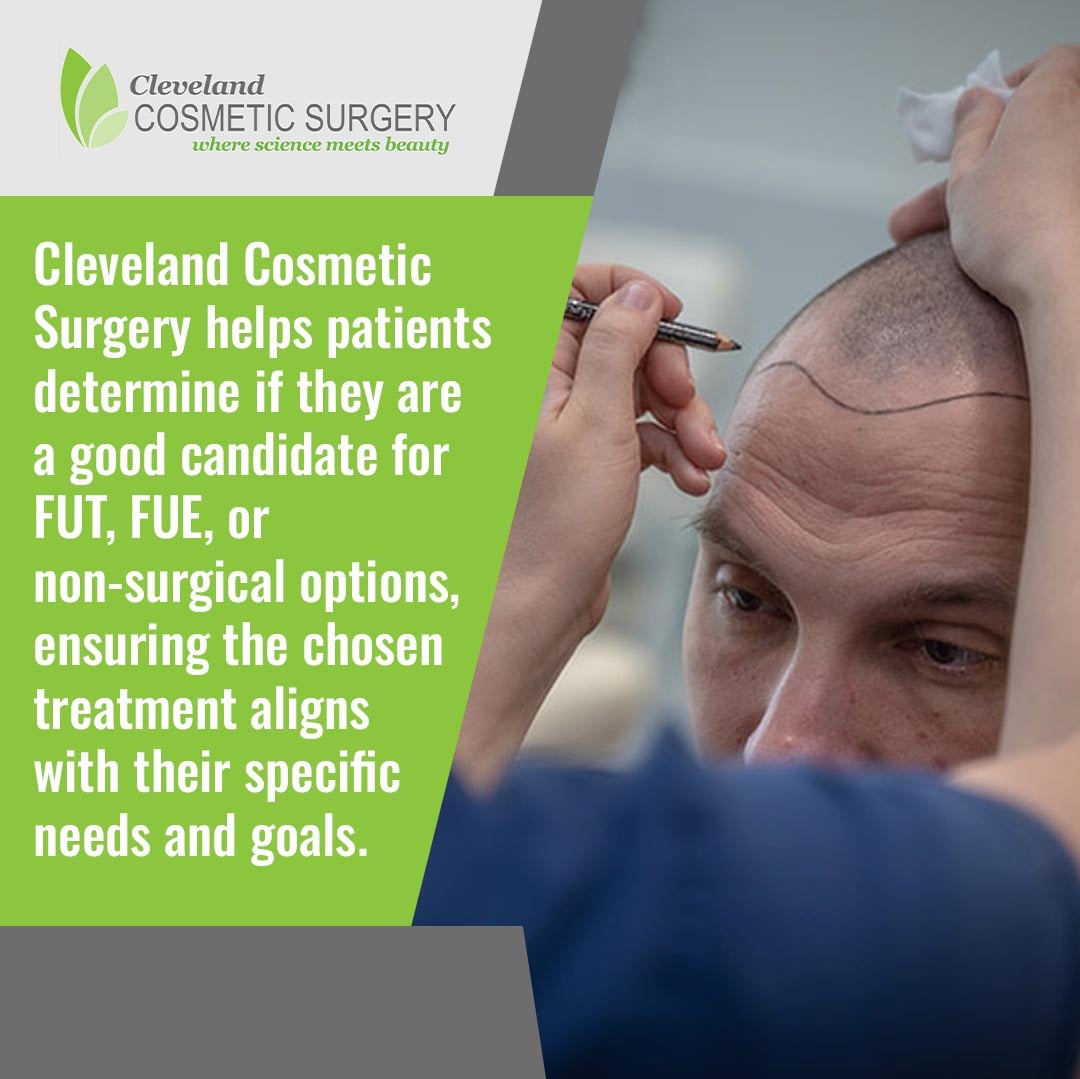
A free consultation at Nature’s Way Hair Restoration / Cleveland Cosmetic Surgery identifies whether FUT, FUE, or non-surgical hair restoration options best match your hair transplant eligibility. This personalized approach helps you achieve natural, lasting results while respecting your hair’s unique characteristics.
Alternatives for Patients Not Suited for FUT
Patients who do not meet FUT hair transplant treatment requirements still have several options for restoring hair. The eligibility depends on donor availability, scalp condition, and hair-loss pattern. Identifying alternatives allows you to pursue restoration safely and effectively.
Follicular Unit Extraction (FUE)
- FUE harvests individual follicles, leaving small, almost invisible scars.
- It is suited for patients with tight scalps or those who prefer short hairstyles.
- Ideal for targeted areas such as small crowns, facial hair, or hairline refinement.
Combination FUT + FUE
- Using both methods allows more grafts while preserving donor areas.
- Staged procedures can address larger balding regions without overharvesting.
- Additional FUE grafts may camouflage linear scars from previous FUT sessions.
Non-Surgical Options
- Medications such as finasteride or minoxidil may help slow hair loss and support existing follicles.
- PRP (platelet-rich plasma) therapy can strengthen remaining hair and improve scalp health.
- Scalp micropigmentation creates the appearance of density in thinning areas.
A free consultation at Nature’s Way Hair Restoration / Cleveland Cosmetic Surgery helps determine whether FUE, a combined approach, or non-surgical treatments best meet your hair restoration needs. This step clarifies which solutions match your goals while respecting your hair’s natural characteristics.
Professional Evaluation Importance
Determining whether you are a good candidate for a hair transplant requires a trained professional, not self-assessment. The eligibility involves multiple factors that are difficult to evaluate without medical experience.
Donor Area Analysis
- Dr. Diamantis assesses the density and quality of follicles in donor regions.
- Dr. Diamantis assesses scalp laxity to predict how well the area will heal after a FUT hair transplant.
- This evaluation helps avoid complications like insufficient grafts or visible linear scarring.
Hair-Loss Pattern Review
- Dr. Diamantis examines the progression of hair thinning across the scalp.
- Dr. Diamantis can identify patterns that may affect long-term results and determine whether stabilization treatments are necessary before surgery.
Health and Biological Screening
- Certain medical conditions, including autoimmune hair loss, diabetes, or vascular issues, can limit transplant success.
- Dr. Diamantis consider these factors to reduce risk and protect graft survival.
A free consultation at Nature’s Way Hair Restoration / Cleveland Cosmetic Surgery provides a detailed assessment of your donor sites, hair-loss pattern, and overall health. This step clarifies whether FUT, FUE, or alternative treatments are most appropriate for your hair restoration goals.
Hair Restoration at Nature’s Way Hair Restoration / Cleveland Cosmetic Surgery
We provide personalized hair restoration tailored to each patient’s needs. Treatments are designed to restore natural density and address hair loss safely while respecting individual goals.
Surgical Options
- FUT hair transplant treatment allows for higher graft counts in a single session.
- FUE (Follicular Unit Extraction) offers minimal visible scarring for patients with tighter scalp tissue or short hairstyles.
- Procedures are selected based on hair transplant eligibility, donor quality, and desired outcomes.
Non-Surgical Alternatives
- Nature’s Way Hair Restoration / Cleveland Cosmetic Surgery uses medical and supportive therapies to strengthen follicles and stabilize hair loss.
- These options complement or serve as alternatives for patients not suited for FUT.
Evaluation and Patient Education
- Donor and recipient sites are carefully examined.
- Risk factors are reviewed to reduce the risk of complications.
- Patients receive guidance on expectations, maintenance, and follow-up care.
Working with us allows you to explore which hair transplant requirements align with your situation and whether you are a good candidate for hair transplant procedures.
Take the Next Step in Hair Restoration
If you want to explore whether FUT hair transplant treatment or other restoration options are right for you, schedule a FREE consultation with Nature’s Way Hair Restoration / Cleveland Cosmetic Surgery in Lakewood, OH. Our team reviews your hair transplant eligibility, donor quality, and overall health to recommend the procedure that fits your goals.
Call us today at (216) 227-4247 (HAIR) or contact us online to discuss your hair restoration options and start planning for natural, lasting results.

Dr. Diamantis obtained his Bachelor of Arts in three years, Magna Cum Laude, followed by a Doctorate of Dental Medicine from Case Western Reserve University. Dr. Diamantis then completed medical school, where he graduated with honors. After completing a 5-year residency at one of the nation’s top hospitals in maxillofacial surgery, Dr. Diamantis furthered his training in craniofacial surgery in Europe, studying with Dr. Hans Bosker of the Netherlands, and Dr. Miguel El Campo of Spain and Mexico.
He then returned to the United States and completed a formal Cosmetic Fellowship in Florida, under the direction of Dr. R.G. Smith, a disciple of the famous plastic surgeon, Dr. Paul Tessier of Paris, France. During his fellowship, Dr. Diamantis trained exclusively in cosmetic surgery with an emphasis on facial plastic rejuvenation, nose surgery, and body lipo contouring.
Dr. Diamantis was required to perform over 1000 distinct cosmetic surgical cases to complete this prestigious cosmetic surgery fellowship. We believe the European-based fellowship of cosmetic training has allowed Dr. Diamantis to excel in the field of cosmetic surgery.
Recent Posts

LOCATIONS
14700 Detroit Ave Lakewood, OH 44107
(216) 227-3333
Office Hours: Monday – Friday 8 am – 5 pm | By Appointment Only
7232 Pearl Rd Middleburg Heights, OH 44130
(216) 227-3333
Office Hours: Monday – Friday 8 am – 5 pm | By Appointment Only
Follow Us
GET IN TOUCH WITH US
GET IN TOUCH WITH US
"*" indicates required fields
LAKEWOOD
14700 Detroit Ave Lakewood, OH 44107
MIDDLEBURG HEIGHTS
7232 Pearl Rd Middleburg Heights, OH 44130
(216) 227-3333
dr.diamantis@clevelandcosmeticsurgery.com
